Find
Discover CUI across approved Microsoft 365 environments, file systems, email, endpoints, CAD files, PDFs, scanned documents, archives, engineering repositories, and other supported sources.

ONGOING CUI MONITORING
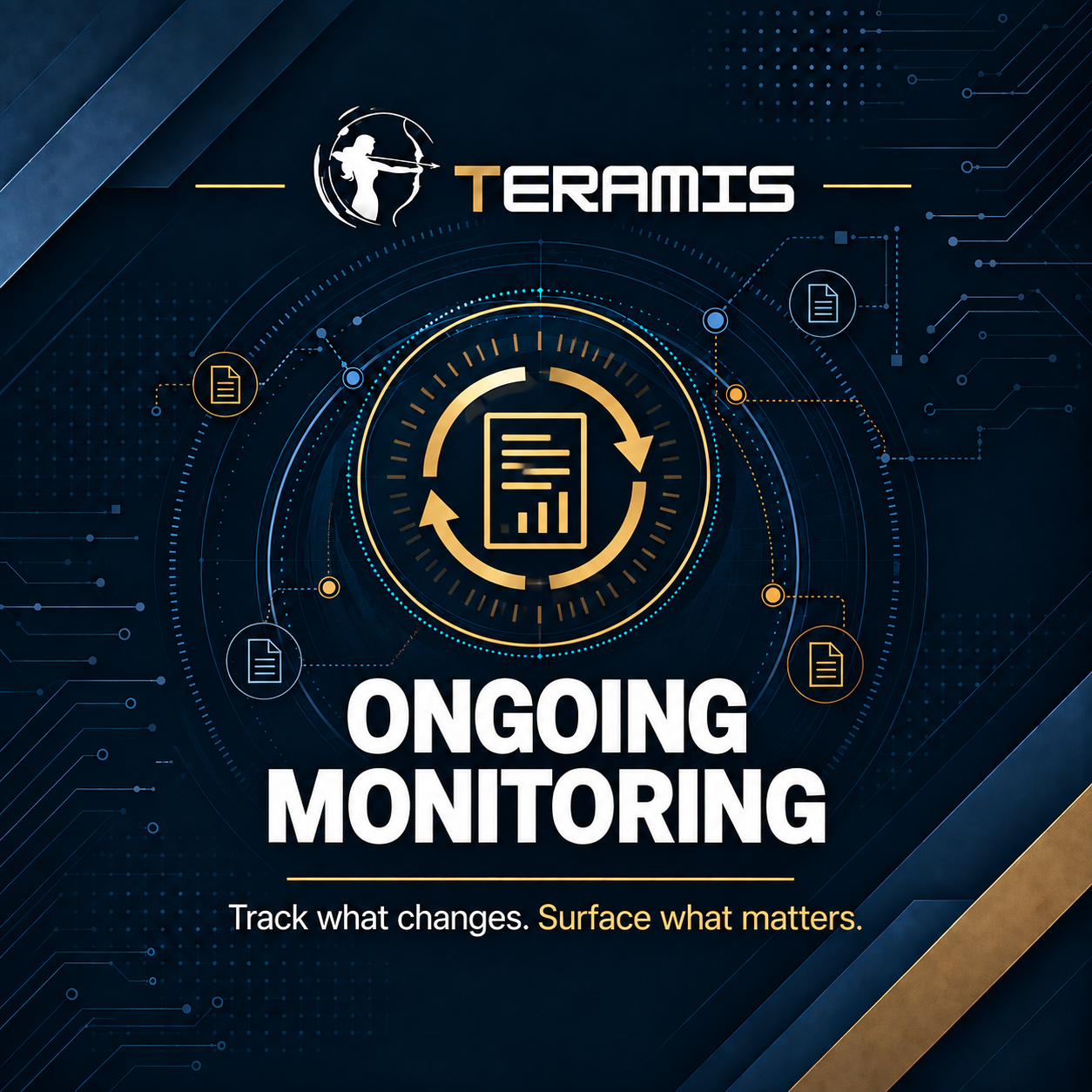
CUI environments change. New files are created, attachments are forwarded, projects move, repositories change, and users interact with information in new ways.
Teramis uses recurring scans to help organizations identify new or moved CUI, surface possible spillage, and compare the current CUI footprint with the boundary they expect to maintain.
Establish the baseline. Monitor what changes.
DISCOVERY IS A STARTING POINT, NOT A FINISH LINE
An initial discovery and validation effort establishes a baseline. Normal business activity begins changing that baseline immediately.
CUI may appear in a new repository, move outside an approved location, return to a legacy system, or arrive through everyday collaboration.
Ongoing monitoring helps teams see those changes instead of assuming the original picture is still accurate.
Trusted by leading companies
What Teramis Helps Surface
Recurring monitoring can help identify:
Content detected after the previous scan.
CUI appearing in a different system, repository, or folder.
Findings outside expected or approved CUI locations.
Changes that may indicate the documented environment needs review.
A record that helps teams compare findings across scan cycles.

Begin with discovery and validated CUI findings.
Run recurring scans based on the organization's monitoring strategy.
Identify what is new, changed, moved, or outside expected locations.
Provide the relevant findings to authorized teams for investigation and action.
Monitoring frequency should reflect how quickly a repository changes, its role in CUI workflows, and the organization's operational requirements. Teramis should not prescribe one cadence for every environment.
Discover CUI across approved Microsoft 365 environments, file systems, email, endpoints, CAD files, PDFs, scanned documents, archives, engineering repositories, and other supported sources.

Validate findings and produce evidence that helps executives, CMMC advisors, compliance teams, and assessors understand whether the documented boundary matches the actual environment.
Run recurring scans to identify new CUI, movement, spillage, and boundary drift before the next assessment, annual affirmation, prime contractor request, or internal review.
Monitoring and Spillage Management Are Not the Same Thing
Teramis provides the monitoring capability that identifies and reports changes.
Teramis Monitoring
Teramis monitors approved environments and reports findings that indicate changes, new CUI locations, or potential spillage requiring review.
Spillage Management
Spillage management is the broader organizational process for reviewing the finding, determining what happened, assigning responsibility, deciding what action is appropriate, documenting the response, and confirming the resulting condition.
Teramis identifies and reports. The customer or authorized partner acts.
Ongoing findings can help organizations review whether their CUI inventory, System Security Plan, asset records, approved storage locations, data flows, and other boundary documentation continue to reflect the actual environment.
That turns CUI visibility from a one-time exercise into an ongoing evidence process.
See how Teramis can establish a CUI baseline and provide recurring visibility into new findings, movement, and possible boundary exceptions.