
.png?width=1774&height=887&name=ChatGPT%20Image%20Aug%203%2c%202026%2c%2001_58_55%20PM%20(2).png)
CMMC Compliance
CUI Scoping
CUI Discovery
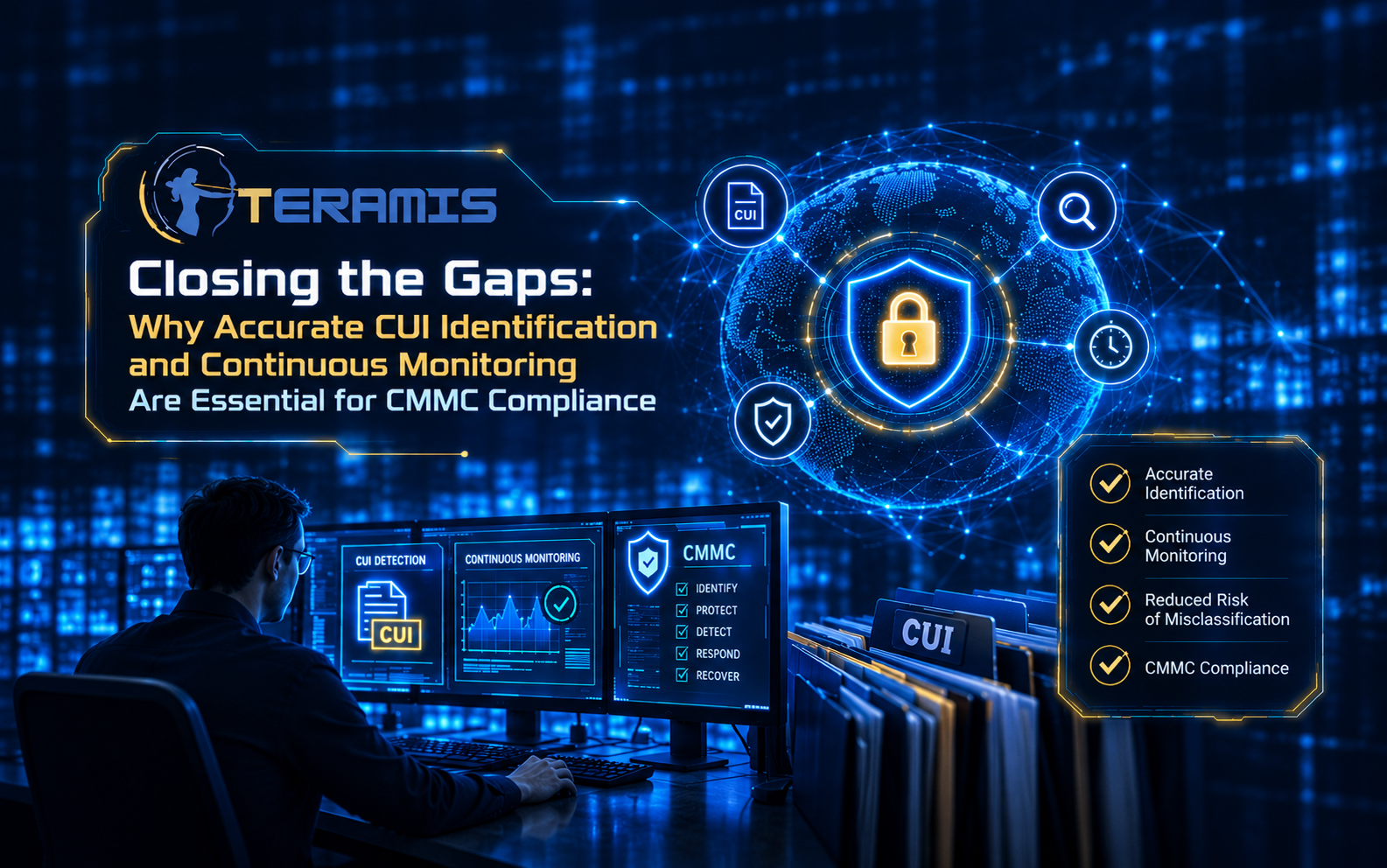

The House Armed Services Committee’s recent push to amend H.R. 3838 sends a strong message to the Defense Industrial Base (DIB): protecting Controlled Unclassified Information (CUI) isn’t just about checking compliance boxes—it’s a critical piece of national security.
 The committee recognizes the value of the Cybersecurity Maturity Model Certification (CMMC) program, which sets standards for securing CUI through strong controls on people, processes, and technology. But it also points out a glaring gap: there’s no mandatory system for continuously monitoring and fixing issues with CUI, especially when it ends up in unapproved places like personal devices or unsecured cloud folders.
The first step to compliance is figuring out where CUI lives—whether it’s in emails, file shares, endpoints, or cloud systems. Without a clear picture, contractors risk failing CMMC audits and, worse, leaving sensitive data vulnerable. The committee makes it plain: relying on manual checks or one-off audits won’t cut it. Contractors need tools that can pinpoint CUI accurately and consistently.
Getting this wrong creates serious problems:
Only by nailing CUI identification can contractors focus their efforts where it counts.
The amendment also underscores a bigger issue: one-time audits don’t keep up with the real world. CUI is always on the move—created, shared, and stored across ever-changing digital environments. Without ongoing oversight, it can easily slip into risky places, like a shared drive or an employee’s personal device, creating compliance headaches and potential data leaks.
The committee is pushing for a risk-based strategy for managing CUI, which fits with the Department of Defense’s shift toward practical, outcome-driven cybersecurity. For contractors, this means adopting tools and processes that don’t just look good on paper but actually protect sensitive data from real-world threats.
The takeaway for the DIB is straightforward:
The Bottom Line: The proposed NDAA amendment signals a shift toward higher standards. Contractors can’t rely on occasional audits anymore. Pairing accurate CUI identification with continuous monitoring is the only way to stay compliant—and keep the sensitive data critical to national defense secure.