.png?width=1774&height=887&name=ChatGPT%20Image%20Aug%203%2c%202026%2c%2001_58_55%20PM%20(2).png)
CMMC Compliance
CUI Scoping
CUI Discovery
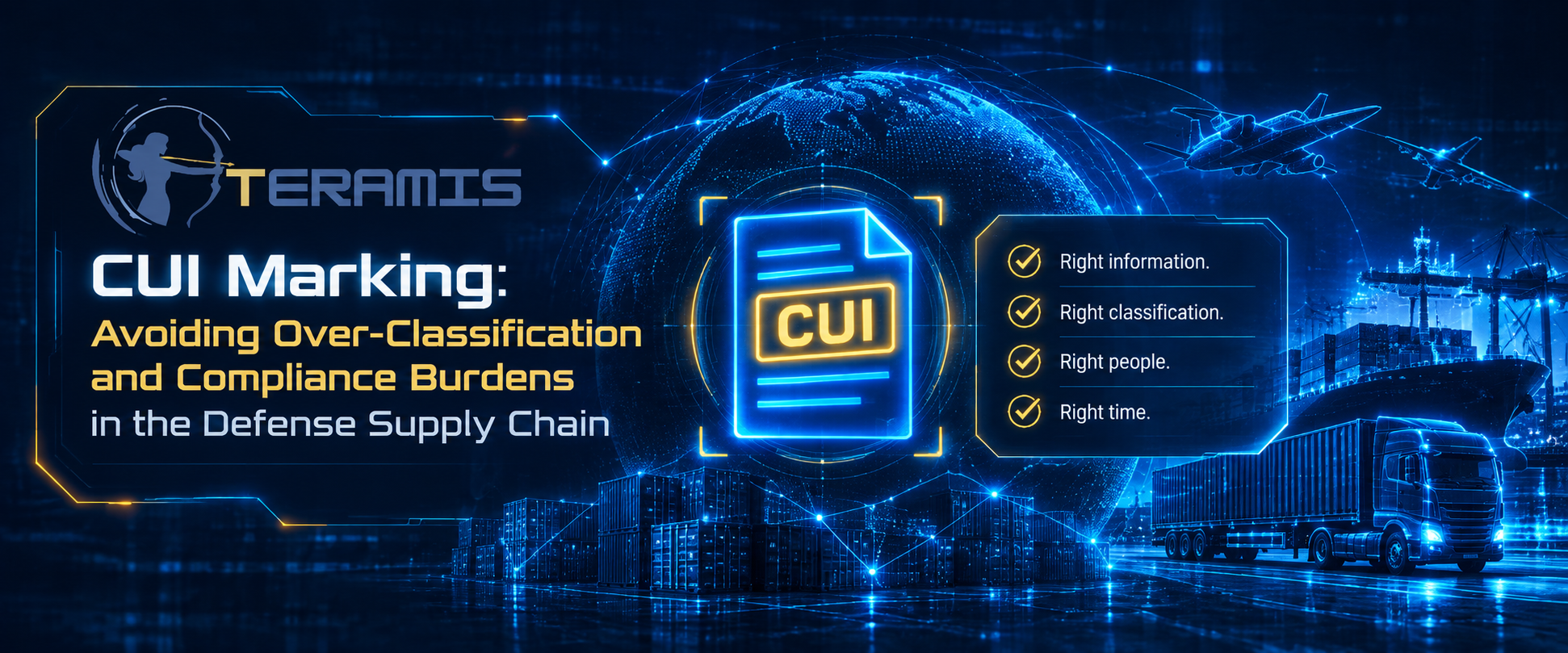

Controlled Unclassified Information (CUI) serves as a critical mechanism for protecting sensitive but unclassified data in the defense supply chain. Proper CUI marking ensures that information receives appropriate safeguards without imposing excessive restrictions or costs. Inconsistent or excessive CUI marking by federal employees frequently results in over-classification, which expands compliance scope and increases expenses for small and mid-sized contractors. This stems from varying interpretations of requirements and legacy practices, leading to burdens under DFARS 252.204-7012 and NIST SP 800-171.
Contractors often express frustration with mismarked or unmarked CUI, including improper application of markings and difficulties in verifying true CUI status. Audits reveal inconsistent CUI marking across DoD components, heightening risks of unauthorized disclosure or unnecessary limitations on information sharing. Documents may carry generic or legacy markings, such as FOUO, complicating proper handling.
Over-classification arises when information receives broader protections than required, compelling contractors to apply full NIST SP 800-171 controls to larger environments than necessary. This elevates costs for cybersecurity infrastructure, audits, training, and system scoping under Cybersecurity Maturity Model Certification (CMMC) programs.
Small and mid-sized firms bear disproportionate impacts due to limited resources. Expanded scoping demands investments in access controls, media protection, and ongoing monitoring. Discussions among contractors highlight systemic undermarking by government entities alongside over-marking tendencies, creating uncertainty and compliance challenges throughout supply chains.
The primary responsibility for designating and marking CUI lies with the government agency disseminating the information. DoD Instruction 5200.48 mandates that the Department of Defense identify and mark CUI at creation or before sharing with contractors. Contractors must follow provided markings and seek clarification on inconsistencies.
Controlled Unclassified Information Markings, DOPSR 25-P-0275, December 2024
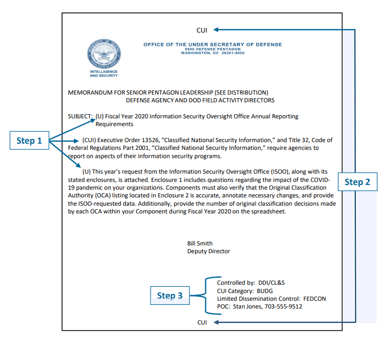
Standardized CUI marking guidelines come from the National Archives and Records Administration (NARA) CUI Program and DoD-specific resources. Essential elements include:
The authoritative CUI Registry at archives.gov/cui lists categories, markings, and authorities. Contractors should consult DoD CUI marking job aids for accurate application, ensuring markings reflect true sensitivity and handling needs.
To implement effective CUI marking and handling under NIST SP 800-171, contractors should adopt these structured steps:
Collaboration with federal partners is essential. Contractors should promptly query unclear markings and use established challenge processes when appropriate. Regular monitoring of markings and data flows helps organizations account for changes and reduce long-term compliance burdens.
Preventing over-classification requires vigilance and consistent processes. Contractors should question overly broad markings and request clarification when needed to help limit unnecessary scope expansion. Security controls should be applied according to the actual information and systems requiring protection rather than by default across the entire environment.
For self-generated data and non-DoD contexts, organizations should evaluate information against applicable CUI criteria carefully. Ongoing reviews of markings, locations, and data flows can help organizations adapt to changing requirements while minimizing unnecessary compliance costs.
Teramis provides a purpose-built platform for defense contractors and CMMC partners to discover, identify, validate, and continuously monitor CUI across approved environments. By replacing assumptions with evidence, Teramis helps organizations better understand where CUI actually exists and use that information to support more defensible CMMC scoping decisions.
Teramis can help organizations identify CUI across complex data environments, document findings, and monitor for newly introduced or misplaced CUI over time. This provides teams with clearer evidence for boundary validation, assessment preparation, and remediation decisions while leaving the appropriate remediation action to the customer or its designated partner.
This approach can help reduce uncertainty created by inconsistent CUI marking, excessive false positives, and assumptions about where sensitive information resides. Teramis supports a more precise view of the CUI environment so security, compliance, and operational teams can make informed decisions about what belongs inside the protected boundary.
Effective CUI marking requires diligence to prevent unnecessary compliance burdens while ensuring sensitive government information receives the protection it requires. Organizations should combine authoritative marking guidance with accurate data discovery, documented flows, evidence collection, and ongoing monitoring.
Understanding what information is actually CUI, where it resides, and how it moves through the environment gives defense contractors a stronger foundation for CMMC scoping and NIST SP 800-171 compliance. Purpose-built discovery tools such as Teramis can help replace assumptions with evidence and support a more defensible approach to protecting Controlled Unclassified Information.